
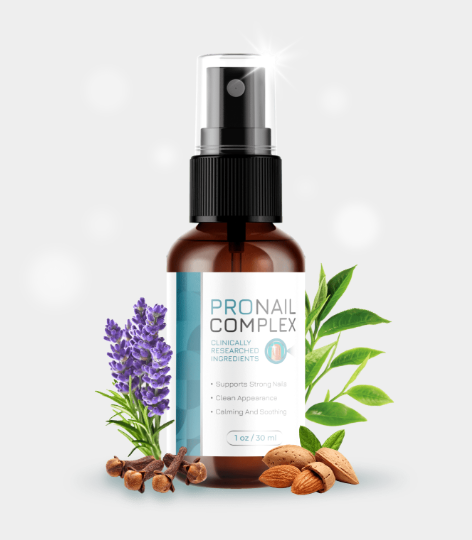
Nail and cuticle health often gets overlooked until something feels off — dryness, brittleness, or nails that just don’t look as healthy as they used to. Rather than a single ingredient, ProNail Complex takes a broad approach: a spray-based formula combining 16 different natural oils and vitamins, aimed at supporting nail and surrounding skin health through consistent daily use.
Here’s exactly what’s in it, what the research says about each ingredient, and what to realistically expect.
What Is ProNail Complex?
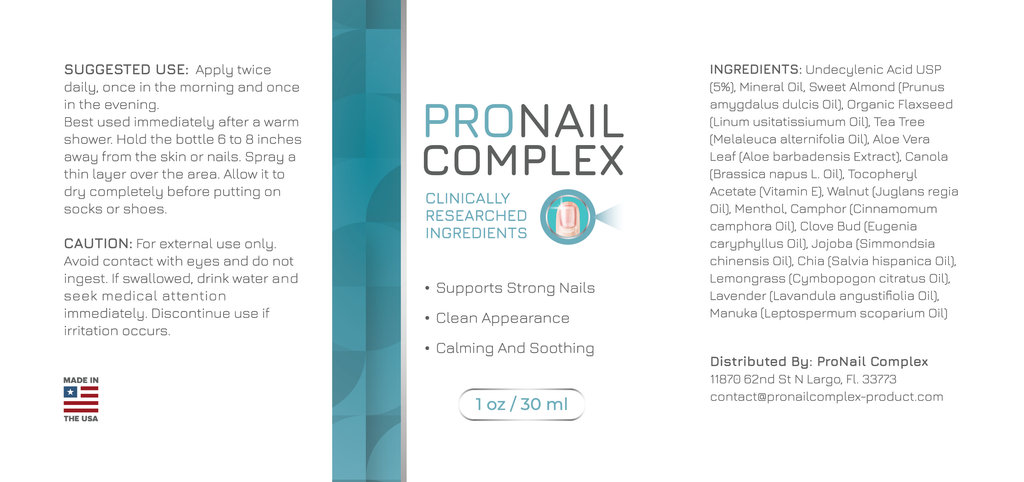
ProNail Complex is a mist spray formula combining a wide blend of carrier oils, essential oils, and vitamins:
Moisturizing & Nourishing Oils
- Mineral Oil, Sweet Almond Oil, Canola Oil, Walnut Oil, Jojoba Oil, Chia Oil, Organic Flaxseed Oil — A group of carrier oils commonly used for their moisturizing, emollient properties.
Active Botanical Oils
- Tea Tree Oil — Widely studied for antimicrobial and antifungal properties; the Mayo Clinic notes it’s commonly used topically for various skin conditions, though evidence for specific uses varies.
- Camphor Oil and Menthol — Commonly included in topical formulas for their cooling sensation.
- Clove Bud Oil — Laboratory research by Chee and Lee (2007, Mycobiology) found clove oil vapor showed antifungal activity against dermatophyte fungi (the type responsible for conditions like athlete’s foot and ringworm) in vitro.
- Lavender Oil — A 2005 in-vitro study by D’Auria et al. (Medical Mycology) found lavender essential oil showed antifungal activity against Candida albicans.
- Lemongrass Oil — Included for its traditional antimicrobial properties.
Vitamins & Additional Ingredients
- Vitamin E — Research by Barros et al. (2020, Microorganisms) found vitamin E showed anti-inflammatory effects in the context of Candida albicans exposure.
- Aloe Vera — A 2007 in-vitro study (Rosca-Casian et al., Fitoterapia) found antifungal activity in aloe vera leaf extract; a separate 2017 study (Saniasiaya et al., Oman Medical Journal) found similar antifungal effects against fungal species tested in culture.
- Organic Flaxseed Oil and Chia Oil — Laboratory research has looked at flaxseed protein extract’s antifungal activity stability (Xu et al., 2008, Journal of Food Science) and chia seed mucilage’s antifungal film properties when combined with other essential oils (Muñoz-Tébar et al., 2022, Membranes).
- Walnut Oil — A 2022 study (Xu et al., Postharvest Biology and Technology) identified antifungal compounds in walnut in a plant-pathogen context (not human fungal infection).
- Undecylenic Acid — This is the ingredient with the clearest regulatory backing: it’s an FDA-recognized OTC active ingredient for certain fungal skin infections. A 2016 lab study (Shi et al., International Journal of Clinical Pharmacology and Therapeutics) also found it affected Candida albicans biofilm formation in vitro.
What the Research Actually Shows (and Doesn’t)
It’s worth being precise here, because this is where a lot of nail-care marketing overstates things: most of the studies behind these ingredients are laboratory (in-vitro) studies, testing an isolated oil or compound against fungal cultures in a controlled lab setting — not clinical trials testing the finished product on human nails. Laboratory antifungal activity is a genuinely meaningful starting point (it’s exactly how many antifungal drug candidates are first identified), but it doesn’t automatically mean a topical spray will clear an active nail infection in real-world use.
There’s a specific, well-documented reason for that gap: nails are structurally difficult for topical treatments to penetrate. The nail plate is dense keratin, which is part of why dermatology research (Pai, Ganavalli & Kikkeri, 2018, Indian Journal of Dermatology) discusses antifungal resistance and treatment challenges specifically in the context of nail and skin fungal infections — and why prescription oral or specialized medical-grade topical treatments are often needed for confirmed nail fungal infections, rather than general cosmetic oils alone.
A quick honest note: ProNail Complex is a topical cosmetic/wellness product built on ingredients with real, published laboratory research behind their general antifungal and antioxidant properties — but it has not been clinically tested as a finished product for treating nail fungal infections, and it is not a substitute for medical diagnosis or treatment. If you suspect a nail fungal infection, see a podiatrist or doctor; topical cosmetic oils are best understood as general nail and skin care support, not a proven fungal infection treatment.
Key Benefits

- Supports nail and cuticle moisture — The broad blend of carrier oils is formulated to combat dryness and brittleness.
- Antioxidant and general skin support — Vitamin E and Aloe Vera contribute antioxidant and soothing properties, each with published research behind their general skin-related benefits.
- Botanicals with published antimicrobial research — Clove Bud, Lavender, and Tea Tree oils each have in-vitro research behind antifungal or antimicrobial activity.
- Cooling, soothing sensation — Camphor Oil and Menthol provide an immediate cooling effect on application.
- Contains a recognized OTC antifungal ingredient — Undecylenic Acid’s inclusion is a meaningful addition, with both regulatory recognition and supporting lab research.
Who This Is For
- Adults dealing with dry, brittle, or generally unhealthy-looking nails and cuticles
- Anyone looking for a broad, multi-oil topical formula backed by ingredients with genuine (if largely lab-based) research
- People interested in natural antimicrobial botanicals as part of a general nail care routine
Who Might Want to Skip It
- Anyone with a suspected or diagnosed fungal nail infection should see a podiatrist or doctor — the research behind these ingredients is largely laboratory-based, not clinical proof the finished product treats nail fungus
- Anyone with known sensitivities to essential oils (tea tree, clove, lavender) should patch-test first
- Anyone with a tree nut allergy should check the label, given the almond and walnut oil content
- Pregnant or nursing individuals should check with a doctor before using essential-oil-heavy topical products
How to Use It
ProNail Complex is applied as a mist spray directly to the nails and surrounding skin. As with most oil-based topical formulas, consistent daily use over several weeks is typically how people evaluate changes in nail and cuticle appearance.
Pros and Cons
Pros
- Ingredients backed by genuine published laboratory research, not just tradition or marketing
- Includes Undecylenic Acid, an FDA-recognized OTC antifungal ingredient
- Broad moisturizing oil blend plus targeted antimicrobial botanicals
- Convenient spray application
Cons
- Underlying research is largely in-vitro/lab-based, not clinical trials of the finished product
- Nail plate structure limits how effectively any topical can treat an active fungal infection
- Contains tree nut oils — a concern for related allergies
- Essential-oil-heavy formula may cause irritation for sensitive skin
Frequently Asked Questions
Is there real science behind these ingredients?
Yes — several ingredients (clove bud oil, lavender oil, aloe vera, undecylenic acid) have published, peer-reviewed laboratory studies showing antifungal activity against fungal species like Candida albicans. However, these are lab studies on isolated ingredients, not clinical trials proving the finished spray treats nail fungus in humans.
Can ProNail Complex cure nail fungus?
No product should be marketed that way without strong clinical evidence, and this one doesn’t have that. The nail plate’s dense structure makes topical treatment difficult in general (a well-documented challenge in dermatology research), which is why confirmed nail fungal infections are usually best evaluated and treated by a doctor, sometimes requiring prescription treatment.
How long until I see results in nail appearance?
Since nails grow gradually, most people evaluate changes in nail and cuticle moisture and appearance after several weeks of consistent daily use.
Final Verdict
ProNail Complex stands out for combining ingredients that actually have published laboratory research behind their antifungal and antioxidant properties — clove, lavender, aloe vera, and undecylenic acid among them — rather than relying purely on tradition or marketing claims. That said, the gap between “lab-tested ingredient” and “clinically proven nail fungus treatment” is real and worth understanding: this is a solid general nail and cuticle care product, not a substitute for medical treatment of a diagnosed fungal infection.